THREE:Happy were humanity, if laws were now dictated to it for the first time, when we see on the thrones of Europe beneficent monarchs, men who encourage the virtues of peace, the sciences and the arts, who are fathers to their people, who are crowned citizens, and the increase of whose authority forms the happiness of their subjects, because it removes that intermediate despotism, more cruel because less secure, by which the people¡¯s wishes, always sincere, and always attended to when they can reach the throne, have been usually intercepted and suppressed. If they, I say, suffer the ancient laws to exist, it is owing to the infinite difficulties of removing from errors the revered rust of many ages; which is a reason for enlightened citizens to desire with all the greater ardour the continual increase of their authority.
FORE:In order that a punishment may attain its object, it is enough if the evil of the punishment exceeds the advantage of the crime, and in this excess of evil the certainty of punishment and the loss of the possible advantage from the crime ought to be considered as part; all beyond this is superfluous and consequently tyrannical. Men regulate their conduct by the reiterated impression of evils they know, not by reason of evils they ignore. Given two nations, in one of which, in the scale of punishments proportioned[167] to the scale of crimes, the severest penalty is perpetual servitude, and in the other the wheel; I say that the former will have as great a dread of its severest punishment as the latter will have; and if there be any reason for transporting to the former country the greater penalties of the other, the same reasoning will serve for increasing still more the penalties of this latter country, passing imperceptibly from the wheel to the slowest and most elaborate tortures, nay, even to the last refinements of that science which tyrants understand only too well. The reader of this treatise will perceive that I have omitted all reference to a certain class of crime, which has deluged Europe with human blood; a crime which raised those fatal piles, where living human bodies served as food for the flames, and where the blind multitude sought a pleasant spectacle and a sweet harmony from the low dull groans, emitted by wretched sufferers from volumes of black smoke, the smoke of human limbs, whilst their bones and still palpitating entrails were scorched and consumed by the flames. But reasonable men will see that the place, the age, and the subject suffer me not to inquire into the nature of such a crime. It would be too long and remote from my subject to show, how a perfect uniformity of thought ought, contrary to the practice of many countries, to be a necessity in a State; how opinions, which only differ by the most subtle and imperceptible degrees, and are altogether beyond the reach of human intelligence, can[232] yet convulse society, when one of them is not legally authorised in preference to the others; and how the nature of opinions is such, that, whilst some become clearer by virtue of their conflict and opposition, (those that are true floating and surviving, but those that are false sinking to oblivion,) others again, with no inherent self-support, require to be clothed with authority and power. Too long would it be to prove, that howsoever hateful may seem the government of force over human minds, with no other triumphs to boast of but dissimulation and debasement, and howsoever contrary it may seem to the spirit of gentleness and fraternity, commanded alike by reason and the authority we most venerate, it is yet necessary and indispensable. All this should be taken as clearly proved and conformable to the true interests of humanity, if there be anyone who, with recognised authority, acts accordingly. I speak only of crimes that spring from the nature of humanity and the social compact; not of sins, of which even the temporal punishments should be regulated by other principles than those of a narrow philosophy.
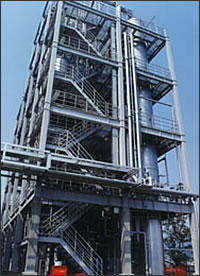
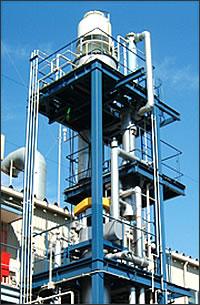
Methanol refinement systems, amyl alcohol refinement systems, ethanol refinement systems, hexanol distillation systems, propanol refinement systems, cyclohexanol distillation systems, isopropanol dehydration systems, ethylene glycol recovery systems, and butanol distillation systems.
FORE:CHAPTER XXXIV. OF POLITICAL IDLENESS.
Hexane distillation systems, tall oil distillation systems, benzene distillation systems, lubricating oil refinement systems, xylene-free distillation systems, low-boiling gas distillation systems, ethylbenzene recovery systems, fusel oil distillation systems, naphthalene distillation systems, propylene recovery systems, and turpentine oil distillation systems.
FORE:Even if we assume that death is absolutely the severest penalty devisable by the law, and that as a punishment for murder it is not too severe, it remains certain, that, relatively to the circumstances of a trial[40] for murder, to the reluctance of judges or juries to pass an irretrievable sentence, to their fear of error, to their conscientious regard for human life, it is really a much less terrible danger for a malefactor to face than a penalty which would justify fewer hopes of impunity.
Ether distillation systems, camphor distillation systems, epichlorohydrin distillation systems, aniline distillation systems, dioxane refinement systems, acetonitrile distillation systems, furfural refinement systems, formalin distillation systems, cyclohexane distillation systems, monoethanolamine rectification systems, polyglycol ether distillation systems, dimethylformamide recovery systems, acrylic glycol ether distillation systems, acrylonitrile refinement systems, acetone recovery systems, pyridine distillation systems, methyl ethyl ketone recovery systems, picoline distillation systems, methyl isobutyl ketone recovery systems, and acetaldehyde recovery systems.